Cebu City has officially postponed the dry run for Phase 1 of the Cebu Bus Rapid Transit (CBRT), moving it from its original schedule this month to November. Consequently, the recent seismic activity in the region was the primary reason for this strategic delay.
Mayor Nestor Archival confirmed the decision, although he had initially pushed to proceed with the dry run as planned. Due to the problem of the earthquake, there is a possibility it will be in November,” Archival stated. Additionally, he revealed that the national government informed him of the potential attendance of President Ferdinand “Bongbong” Marcos Jr., making the smooth execution of the event even more critical.
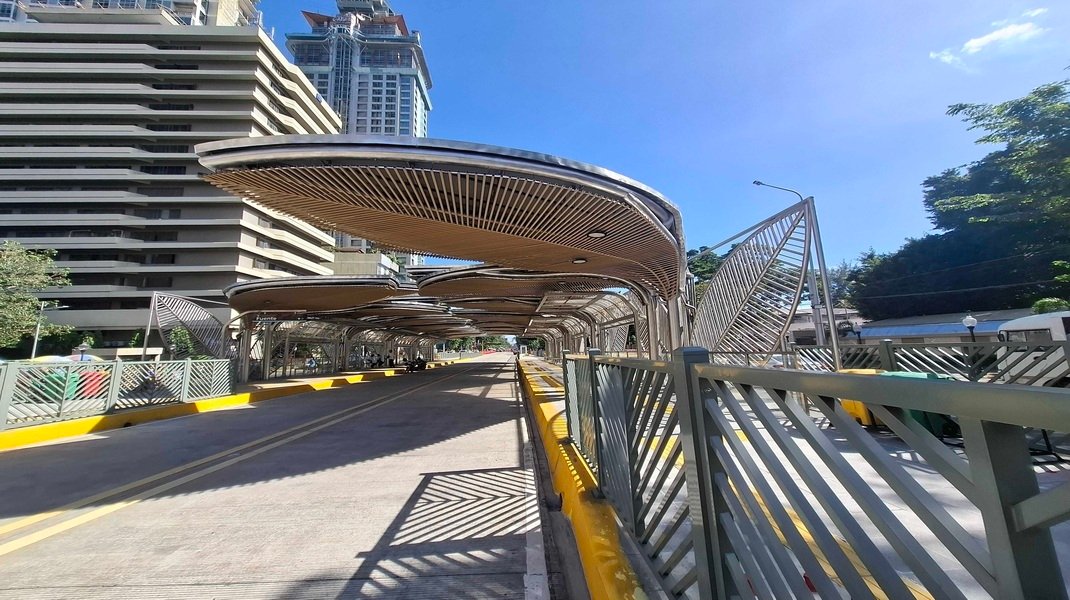
Regarding project readiness, the Mayor has encountered several challenges. For instance, since the project has not been officially turned over to the city, he has asked the Department of Transportation (DOTr) to manage the stations after reports that some were being misused. Furthermore, Archival pointed out that several aspects of the overall project still need to be rectified before operations can begin.
Despite the postponement, the city is actively continuing with test runs and route inspections. However, these tests have already drawn public complaints about heavy traffic congestion. Archival explained that the traffic buildup is a normal part of the transition, primarily because of the newly implemented lane changes. Moreover, he noted that the problem is worsened by some drivers who drop off passengers indiscriminately along the route.
In the meantime, Archival is requesting that vehicles be permitted to use the CBRT lanes until the pilot run for Phase 1 officially begins. “Because it’s the same route… these are just some adjustments that we are looking at,” he said.
To address the ongoing issues, the Cebu City Government and CBRT management are finalizing and adjusting the routes for Package 1. The dry run, which was initially set for September 29, 2025, has now been moved to a later date. Archival remains firm on testing the specific stretch from the South Road Properties (SRP) to Ayala and has requested that issues along this route be resolved.
Specifically, the Mayor has called for a cleanup of the stations and personally observed protruding electrical wires along the route. Therefore, he wants the installation of protective bollards fast-tracked to clearly separate the dedicated BRT lanes from mixed traffic. He also formally requested the installation of lane markers and directional signs from the DOTr and CBRT management, emphasizing that these should have been part of their core responsibilities.
The absence of these critical elements, Archival explained, contributes significantly to congestion. This situation may be worsened by the lack of a comprehensive traffic analysis, a document that has yet to be submitted.
“It is also important that there are enough personnel to guide the route, because sometimes vehicles just wander,” Archival added. As a next step, he plans to propose designated loading and no-unloading zones to help regulate traffic outside the CBRT lanes.
“This is what I will bring up with them because it is very difficult if I am the only one analyzing,” he stated, stressing that congestion during CBRT operations must be properly addressed. Accordingly, he has directed the Cebu City Transportation Office (CCTO) to determine the exact number of traffic personnel needed to be deployed along the CBRT corridor.
Looking ahead, Archival said the city will intensify its information campaign about the new traffic schemes. Finally, he clarified that the current dry run should not yet be compared to the actual operation of Package 1, indicating that there is still considerable work to be done before the system is fully operational.