Cebu has solidified its position as the nation’s leading information technology and business process management (IT-BPM) hub outside Metro Manila, demonstrating remarkable resilience despite recent market challenges. However, industry experts are now warning of a tightening office supply as demand continues its upward trend.
In response to this constraint, leaders are urging local real estate developers to prioritize disaster-resilient and sustainable building designs, emphasizing that this shift is critical for securing the province’s long-term growth.
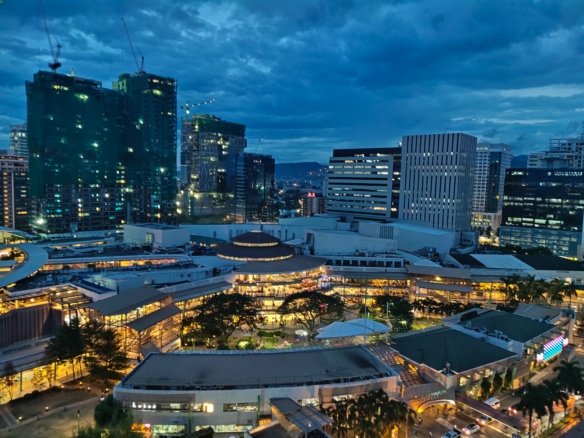
According to the latest report from global investment management firm Colliers, Cebu IT Park stands as the undeniable epicenter of economic growth in the Visayas and Mindanao regions. The district remains the primary regional growth driver, supported by strong office take-up, consistently falling vacancy rates, and a limited pipeline of new developments. Notably, it has also maintained operational continuity through various natural calamities.
Concretely, office vacancy rates in Cebu IT Park plummeted to 14% in the third quarter of 2025, a significant drop from 28% in 2022. During the same period, transaction volumes surged, with over 96,000 square meters of office space absorbed in the first nine months of 2025 alone.
Ohara Rosales, Colliers’ Manager of Office Services – Tenant Representation for Cebu, attributed this robust demand to expansions by major professional service and outsourcing firms. “Key players like Concentrix, Optum, EY, and Wipro are fueling this growth,” Rosales stated. She further emphasized, “Beyond accessibility and talent availability, Cebu’s resilience has become a decisive factor for occupiers looking to expand outside Metro Manila.”
Furthermore, the district dominates Metro Cebu’s flexible workspace market, accounting for 75% of the total flex inventory. As of the third quarter of 2025, Cebu IT Park hosted approximately 10,500 flex seats across operators such as KMC Solutions, Regus, The Company Cebu, and Enspace. This trend clearly reflects the growing preference among businesses for agile office solutions.
Looking ahead, Colliers highlights a major challenge: with no new office supply expected in Cebu IT Park for the next three years, availability is set to tighten considerably. Consequently, the firm encourages developers to activate idle projects in other parts of Metro Cebu. Specifically, they recommend focusing on developments suited for green, BPO-grade, and disaster-resilient construction.
In conclusion, Rosales underscored the necessity of this strategic pivot for Cebu’s future. “For Cebu to sustain its role as the primary IT hub in the Visayas, future office projects must be designed with resilience and sustainability at their core,” she asserted. “Ultimately, these factors now directly influence tenant decisions and long-term investment value.”