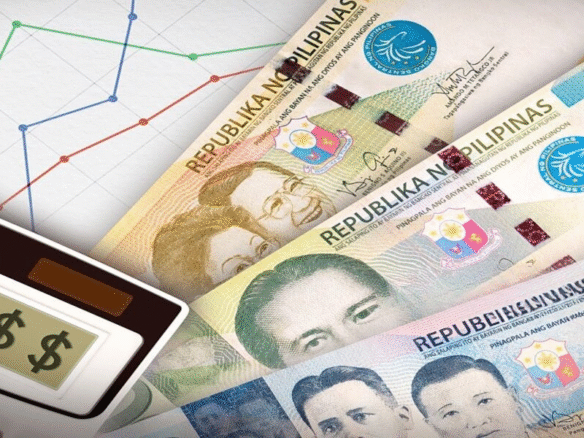
The country’s foreign exchange buffer strengthened further last month, driven by government deposits and robust central bank investment earnings, according to the Bangko Sentral ng Pilipinas (BSP). As of end-June 2026, the Philippines’ gross international reserves (GIR) climbed to $104.7 billion—a notable increase that underscores the economy’s external resilience.
This latest reserve level remains more than sufficient to shield the economy from external shocks. In fact, the BSP noted that the current stockpile comfortably covers 6.8 months’ worth of imports of goods, services, and primary income. Moreover, it provides roughly 3.7 times the country’s short-term external debt based on residual maturity—a metric that signals strong capacity to meet foreign obligations even under stress.
What Drove the Increase?
According to the central bank, the primary catalysts for the reserve buildup were twofold. On one hand, net foreign currency deposits made by the national government with the BSP injected significant liquidity into the reserve pool. On the other hand, the central bank’s overseas investments generated substantial net income, further padding the buffer.
However, these gains did not come without partial offsets. The BSP clarified that downward valuation adjustments in gold holdings and foreign currency assets, coupled with ongoing government debt servicing obligations, tempered the overall expansion. Despite these headwinds, the net effect remained firmly positive.
Balance of Payments Improves Notably
In a related development, the country’s overall balance of payments (BOP) registered a $3.4-billion surplus in June alone. This monthly windfall played a pivotal role in narrowing the cumulative deficit for the first half of the year to $3.9 billion—a marked improvement from the $7.3-billion shortfall recorded through May.
The sharp reduction in the year-to-date deficit reflects a gradual rebalancing of external accounts, even as structural challenges persist.
Challenges and Mitigating Factors
The BSP attributed the lingering first-half deficit to two persistent drags: the ongoing trade-in-goods gap and sustained foreign portfolio investment outflows. Both factors continue to weigh on the country’s external position, creating headwinds that require careful monetary management.
Nevertheless, these pressures have been substantially cushioned by several stabilizing pillars. Steady remittance flows from overseas Filipino workers (OFWs) have provided a reliable source of dollar inflows, while foreign government borrowing, a resilient services trade sector, and sustained foreign direct investment (FDI) have collectively helped offset the outflows. This diversified support system, according to analysts, underscores the structural strength of the Philippine economy amid global uncertainties.
Outlook Moving Forward
With reserves comfortably above the international benchmark of three months’ import cover and the BOP trajectory improving, market watchers remain cautiously optimistic. The central bank’s proactive management of foreign exchange assets, combined with continued remittance growth and investment inflows, positions the country well to navigate potential external volatilities in the coming months.